


Express Delivery Available
View delivery information

5 Star Rated
On Google & TrustPilot
Handmade in the UK
From the finest materials
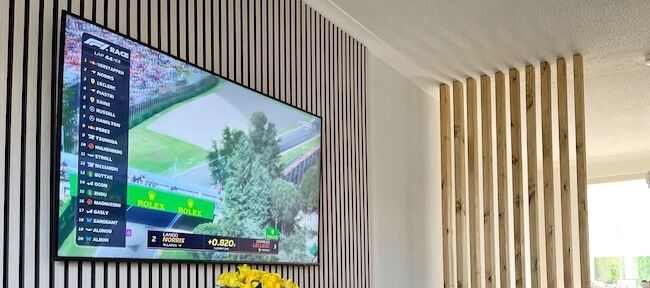
From sleek, modern styles to softer, more traditional looks, we know of loads of top media wall ideas to update your home.
Living rooms are such important parts of the house. They’re the rooms in which people gather to catch up, watch films, play board games or even just curl up with a good book. As such, they deserves particular attention in home decoration plans.
One of the best ways to make a statement with your living room is with a media wall. These are feature walls that centre on your entertainment system, such as your television or sound system.
Media walls are incredibly effective ways to inject personality and warmth into the space, creating a focal point while offering extra storage solutions. But, with so many potential styles to choose from, it can be hard to know where to start.
To help you find the right approach for you, we’ve gone through some of our favourite suggestions below.

When planning your media wall project, consider installing decorative wall panelling to add depth to the living space.
In the picture above, ribbed panelling has been added to the shelving units, adding gorgeous texture and shadows to the wall. The joinery was completed by the brilliant people at Get That Covered, using ribbed wall panels from Panelling Direct.
There’s a classic symmetry to the wall, accentuated by the vertical panelling. The overall design is a simple yet eye-catching media wall that’s perfect for a modern home.
One media wall trend that’s very popular is adding shelves around a TV, lined with decorative items like sculptures.
For maximum impact, consider extending the shelves across the full width of the room. Then arrange your items along them with balanced spacing, so that the wall looks curated yet homely.
To achieve this style on a budget, have a look at ornaments in shops like Dunelm and Next. You can find some beautiful home decor pieces for under £20.
See Molly-Mae’s home Instagram account for inspiration. She recently shared a picture of her media wall that was decorated with abstract sculptures and vases, all in similar neutral colours. The wall was made yet more striking by a grand fireplace, which brings us to our next point…

A well-designed media wall with a fireplace is the height of luxury. When the weather gets cold, watching a cosy film with the fire on is bliss.
Again, the media wall in the picture was installed by Get That Covered. It includes an electric fireplace, which is generally a cleaner and safer option than a wood burner as it doesn’t create smoke. Also, as electric fireplaces don’t need chimneys, it avoids the worry of mounting a TV on a chimney breast, which may struggle to sustain the weight.
When adding a fireplace to a media wall (especially wood burners and gas fires), be careful to protect the TV from heat damage. Mantels and heat guards help, and it’s also a good idea to do a few key checks:
Another thing to keep in mind is whether a TV above the fireplace would be too high to comfortably watch. This shouldn’t be as much of an issue with electric fires like the one above, as they don’t need to be super tall. It’s just something to consider before mounting the TV on your wall, particularly if you have a traditional fireplace.
There are a few approaches you can take to lighting your media wall, depending on the style you’re aiming for.
If you’re installing open shelving units around the TV, consider adding spotlights to each one. The same applies for floating shelves. With the right lighting, you can almost give the impression of an art gallery by highlighting stunning decorative pieces.
Keen to go a bit bolder? Try introducing new colours into your scheme with LED lights, either around the screen or as backlit shelving.
It’s also possible to get TVs with built-in lights that frame the screen, such as the Philips Ambilight. As the name suggest, it’s ideal for ambient lighting, creating a soft, calming backdrop with a contemporary feel.
Don’t let glare on your TV ruin your media wall. It’s something to think about when planning the design, right from the point of deciding which wall to use.
In rooms with large windows, it will admittedly be harder to avoid. But, as much as possible, try to keep TVs away from the lines of direct sunlight.
If you discover it’s a problem after building the media wall, you could always add curtains or blinds to resolve the issue.
Keep in mind that interior lighting can also cause glare. So, when working out where to place lamps, compare different options to avoid them shining on the screen.
Minimalist interiors can easily be let down by visible wires and power outlets, so make sure cable management is a key part of your media wall design.
Ideally, the TV should fit into the media unit neatly, with custom cabinetry framing the screen and keeping wires from view.
As well as the TV, factor in any other devices you’ll also use, such as gaming consoles and speakers. With all the cables hidden, it will look so much tidier, creating a clutter-free TV area.
While open shelving can look amazing on media walls, so too can closed cabinets. And these have the added benefit of offering built-in strorage, so they’re definitely worth considering.
If, say, you need somewhere to store gaming controllers or board games, cabinets would help. They’d ensure your things are easily accessible without them impacting the room’s aesthetics.
Ever dreamt of having your own home library? If so, this tip is for you.
Filling the wall around a TV with book shelves creates that library feel, putting your favourite novels at the heart of the room’s design.
If you don’t yet have enough books to fill the shelves, consider buying some second-hand, such as from charity shops. This is a good excuse to add a few new titles to your to-be-read list, all in the name of great interior design, of course.
Top tip: For more traditional decor, look for antique hardback books. Ones with clothbound covers will bring in some lovely textures, and the faded colours will look beautiful with a neutral colour scheme.
When watching telly, you generally want to avoid distractions. And this is something to be wary of when planning your media wall.
Bold, contrasting colours may look great as a feature, but they likely won’t be the most effective at helping you switch off.
With this in mind, colour drenching is a top choice for media walls. Think about the scheme of the rest of the room, and colour match the wall around your TV for a subtly curated look.
Subtlety not your thing? You by no means have to colour drench media walls. But, if choosing to introduce more than one colour, we do suggest thinking carefully about which ones are complementary.
A good way to approach this is by panelling some parts of the wall and painting those areas one colour, with the un-panelled sections painted as a slight contrast.
It could be that you add half-wall panelling, or maybe ribbed panelling within shelving units to add an interesting texture.
Whatever style you choose, our collection of wall panelling kits should have what you’re looking for.
When comparing media wall designs, think carefully about texture and depth.
As a general rule, it’s best to place the TV on the outermost part of the wall, with any integrated shelving going further back. This gives the impression that the shelves are nestled into the wall, creating visual depth. It’s a great option for larger rooms, where you can afford to use up a bit of floor space.
For small rooms, however, you might prefer to keep the media wall more shallow. A good way to achieve this is with wall panels.
Panelling adds texture to the wall without taking up much space.
One option is tongue and groove which offers consistent vertical panelling. These are lovely in homes with a warm and understated style.
Alternatively, for a classic square formation of panels, try shaker wall panelling. We have a made-to-measure wall panelling creator to help you get the right fit for your room.
Ultimately, think about what would most suit your home. In new builds, for example, minimalist designs with clean lines can make an incredible visual impact. In older buildings, on the other hand, more traditional walls with softer edges often work well.
Hopefully, with the media wall ideas we’ve covered here, you can find the perfect style for your home.
Looking for more home inspiration? Discover our favourite wall panelling ideas.


